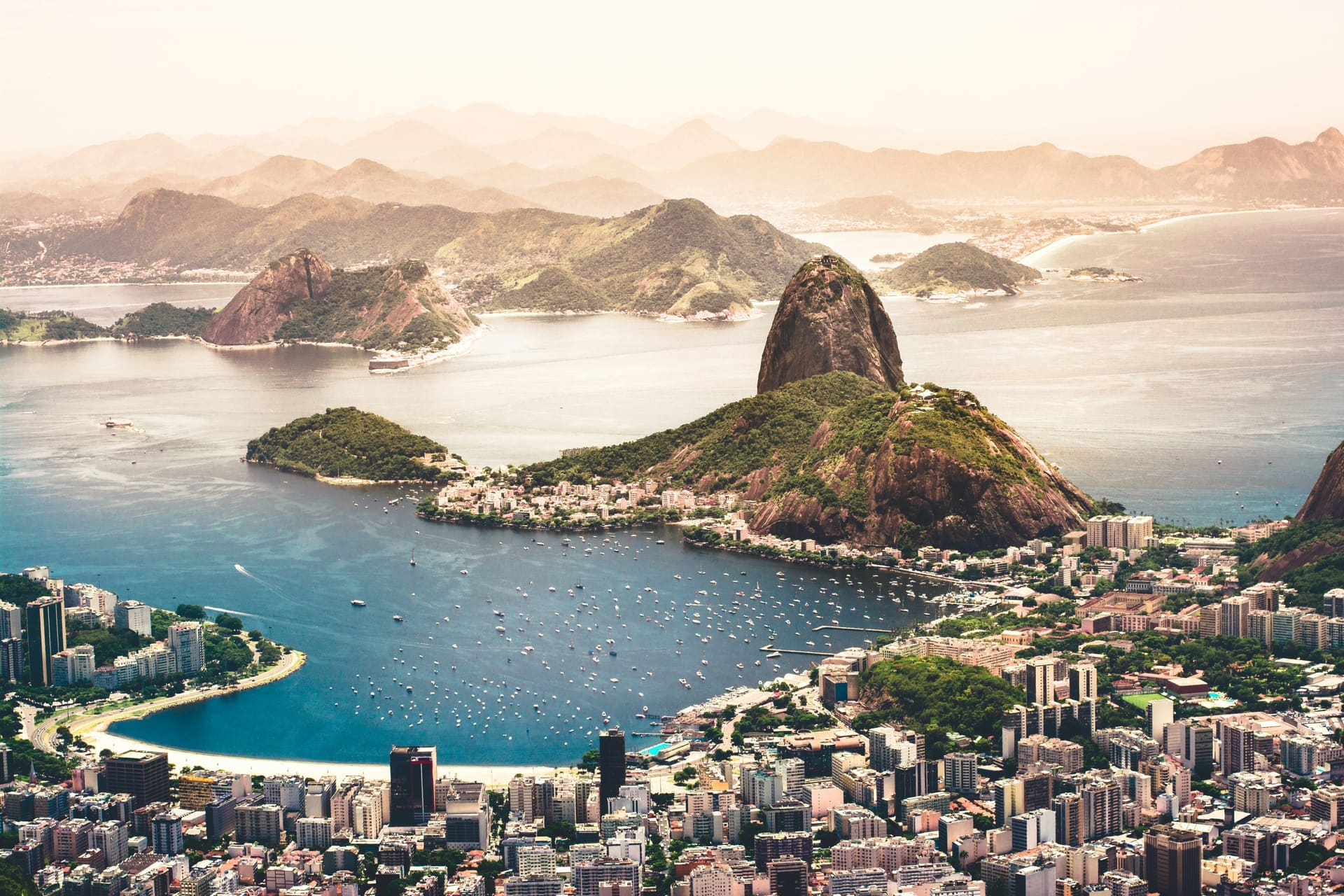
Rio de Janeiro’s international arrivals rose 19.9% in the first half of 2024 to 760,200 visitors, per data from Brazil’s Ministry of Tourism, Embratur, and the Federal Police — the city’s second-highest half-year figure on record, trailing only the surge around the 2014 FIFA World Cup. Most guides to the city lead with the beach you should lie on. This one leads with the decision that actually shapes your trip: which neighborhood to book, how to move between the hills and the coast, and which of Rio’s landmarks carry a real, checkable story behind them.
Where to base yourself
Zona Sul — the South Zone covering Copacabana, Ipanema, Leblon, Lagoa, and Botafogo — is consistently identified by travel guides, including Lonely Planet’s Rio coverage, as both the best-located and best-patrolled part of the city for visitors, with heavy tourist and police presence relative to Rio’s other districts. Copacabana is the classic first-timer base: beachfront, metro-connected, and the most affordable of the beach neighborhoods. Ipanema, next door, is generally regarded as the safer, quieter option for solo travelers and couples, flanked by the Lagoa Rodrigo de Freitas lagoon. Leblon, Rio’s most residential beach neighborhood, is where many longtime Cariocas choose to live and ranks among the calmest areas in the city. Santa Teresa, the hillside bohemian district above the center, is genuinely worth a visit for its cobblestone streets and views, but several Rio-focused travel writers explicitly recommend treating it as a day or evening trip rather than a first-time home base, given its distance from Zona Sul’s transit and tourist infrastructure. Wherever you stay, the standard local advice — keep your phone on a lanyard and out of sight while walking — applies across all of these areas, not just the ones with a reputation.
Getting there
Santos Dumont Airport (SDU), just 6.7 km from the center, handles most domestic shuttle routes and is the more convenient option if your itinerary starts in-city. Rio Galeão–Tom Jobim International Airport (GIG), 12.8 km out, is the main international gateway. A third, smaller field, Jacarepaguá–Roberto Marinho Airport (RRJ), sits 16.5 km from downtown and serves general aviation and some regional traffic.
Getting around
MetrôRio opened its first stretch — five stations between Glória and Praça Onze — on March 5, 1979, after a construction run that started in 1970 and stalled for three years in the early 1970s for lack of funding. Today the system runs three lines across 58 km and 41 stations, carrying roughly 498,000 passengers a day and 182 million trips a year as of 2024, making it Brazil’s second-busiest metro after São Paulo’s. The catch: Line 2 terminates short of downtown at Estação Estácio, so trips from the North Zone typically require a transfer onto Line 1 to reach the center. Zona Sul’s beach neighborhoods are walkable to each other along the coast, but the hills — Santa Teresa and the Christ the Redeemer approach — are a different terrain entirely and are usually covered by tram, van, or organized transport rather than on foot.
What’s actually worth your time
- Christ the Redeemer — Inaugurated October 12, 1931, this 30-meter Art Deco statue by sculptor Paul Landowski and engineer Heitor da Silva Costa is the largest Art Deco sculpture in the world and forms part of the “Rio de Janeiro: Carioca Landscapes between the Mountain and the Sea” UNESCO World Heritage listing, inscribed in 2012.
- Valongo Wharf — Built in 1811 and used to land an estimated 900,000 enslaved Africans before the trade was banned in 1831, the site was buried during a 1911 urban renewal project and rediscovered by construction crews in 2011 ahead of the World Cup and Olympics; UNESCO inscribed it in 2017 as, in its own description, “the most important physical trace of the arrival of African slaves on the American continent.”
- Museu Nacional de Belas Artes — Established by federal law on January 13, 1937, the museum inherited the collection of Brazil’s National School of Fine Arts, itself built around works the Portuguese royal court brought to Rio in the early 1800s; its holdings span more than 20,000 paintings, sculptures, and prints.
- Candelária Church — Construction on the current building began in 1775 under military engineer Francisco João Roscio and the church was inaugurated, still unfinished, in 1811 in the presence of King John VI; its dome, completed only in 1877, reaches 62.3 meters.
- Brazilian Academy of Letters — Founded by novelist Machado de Assis and a group of writers, with bylaws passed January 28, 1897; since 1923 it has been headquartered in a building donated by the French government — a replica of Versailles’ Petit Trianon.
- Flamengo Park — Opened October 17, 1965, on 120 hectares of land reclaimed from Guanabara Bay, the park’s modernist landscaping was designed by Roberto Burle Marx, who planted roughly 17,000 trees across more than 240 species.
- Parque Lage — A 1920s remodel of an older mansion at the base of Corcovado mountain, commissioned by industrialist Henrique Lage for his wife, opera singer Gabriella Besanzoni; it now houses a public visual arts school and serves as a trailhead for the hike up to Christ the Redeemer.
Planning note
Santos Dumont and Galeão serve different route networks, so check which one your flight actually lands at before booking a Zona Sul hotel — the difference in transfer time is meaningful. Christ the Redeemer’s official access is via the Corcovado Rack Railway or shuttle van from Cosme Velho; independent hikers using the Parque Lage trail should budget roughly two hours each way and are climbing an unofficial route through Tijuca Forest, not the tourist shuttle. If you are hiking the Parque Lage trail, check the Rio de Janeiro rain forecast before you set out.
Sources
- Record-Breaking Tourist Arrivals in Rio de Janeiro for the First Half of 2024 — The Rio Times
- 5 best neighborhoods in Rio de Janeiro — Lonely Planet
- Rio de Janeiro Metro — Wikipedia
- Christ the Redeemer (statue) — Wikipedia
- Valongo Wharf — Wikipedia
- Rio’s Valongo Wharf wins World Heritage status — Malay Mail
- Museu Nacional de Belas Artes — Wikipedia
- Candelária Church — Wikipedia
- Brazilian Academy of Letters — Wikipedia
- Flamengo Park — Wikipedia
- Parque Lage and the School of Visual Arts — The Rio Times
Read the Top Places to Visit in Brazil roundup for how Rio compares to the rest of the country.